
DOLPHIN THERAPY AND DOWN SYNDROME:
Dolphin Therapy may have much to offer a kid with Down Syndrome or other disability. Dolphins therapy is suitable for adults and kids with Down Syndrome.
There are three options in dolphin therapy to consider when used for those with Down Syndrome:1… Dolphin Therapy works on those with Down Syndrome because of it’s novelty.Dolphin Therapy with the resultant exposure to real dolphins, is considered a novel stimulation which can assist in the development of desired behaviours in those with Down Syndrome. For nearly everyone with Down Syndrome, there is no contact with dolpins prior to the commencement of dolphin therapy. Therefore, the |
|
|---|
dophintreatment provides an environment where the kid or adult with Down Syndrome has minimal past learning associations.
In this way, dolphin therapy reduces the controlling influence of past learning. In other words, with dolphin therapy, being overcome by the ‘newness’ of the situation, undesired or bad behaviours may be suppressed easier and the opportunity for new or better behaviours to be established is more likely, including in those who have Down Syndrome.
The desired behaviour is then generalised to other settings away from the dolphin therapy by using pictures, ornaments of dolphins and so on that enable the person to remember the behavior they learned with the dolphin.
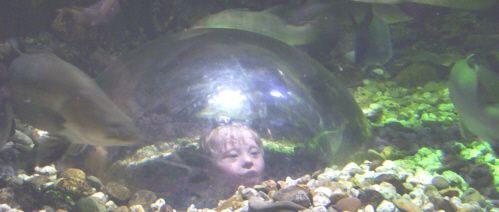
2… Dolphin therapy is relaxing and therefore enhances learning in those with Down Syndrome:
Dolphin Therapy removes the cares and concerns of the world.
Being in the water with dolphins, or on a ship out at sea watching and following dolphins, is what dolphin therapy is for a someone with Down Syndrome.
The dolphin therapy helps to focus the person’s attention on to their interaction with the dolphins and away from their normal day to day concerns – thereby the dolphin therapy reduces stress and anxiety, thus making people with Down Syndrome or other disabilities more open to learning new behaviour, interactions and thinking patterns.
3… Is dolphin therapy for those with Down Syndrome enhanced by dolphin sonar or talk?
A third group group believes dolphin therapy works on those with Down Syndrome or other disabilities, because dolphins, when exposed to humans with a disability, can identify that the humans are disabled and the dolphins then emit therapeutic sound waves through the water into the person.
Some parents firmly believe that the dolphin therapy achieves outstanding results, such as being able to walk for the first time, or develop speech, through the sounds the dolphins made.
In deed, in one video clip I saw, these effects of the dolphin therapy were immediate on a young lady with cerebral palsy and the researcher showed the dolphin therapy sounds were different to the dolphin’s normal sounds.
4… Dolphin therapy and Down Syndrome – A New Development – Dolphin therapy on cd:
Some researchers into Dolphin Therapy are really getting into the “Why does Dolphin therapy work?” mode.
Since putting this page on Dolphin therapy together some years back, one can now go out and buy dolphin therapy cd’s and dvd’s.
This type of Dolphin therapy is very much aimed at the overstressed yuppy, rather than as the proper dolphin therapy we discuss here for Down Syndrome. However, such dolphin therapy recordings may also be useful in reducing stress in those with Down Syndrome.
5… Dolphin therapy and Down Syndrome – my understanding:
I can understand the first two Dolphin therapies as interventions for those with Down Syndrome, as they are very much consistent with behaviour modification principles that I was taught at university in my psychology days.
The third Dolphin therapy / treatment for Down Syndrome seems very odd, bestowing almost supernatural powers onto the dolphin – I tend to disbelieve the third dolphin therapy and think it may be just that the kid becomes so consumed in the novel situation with the dolphins, that the disability he or she has been taught to live with, diminishes in their self perception, allowing them to outgrow, perhaps, the learned part of having the disability, though the physical disability remains unchanged.
To give a hypothetical example, I grow up with a deformed leg, I am taught by my parents, friends and others that are interacting with me, that my leg is not able to do what it should, so I learn not to use it to it’s full potential – it’s all about expectations from others. I enter a pool with dolphins, my mind becomes so preoccupied with the dolphins that I forget in the pool that I have a leg that doesn’t work, so I start to use my leg more fully and everyone becomes amazed that my leg is working better.
I think Dolphin therapy is a mix of behavior modification and cognitive restructuring – getting the kid or adult with Down Syndrome to act and think differently.
Certainly, it will be interesting to follow the research on the use of dolphin therapy sounds and to see whether dolphin therapy sounds actually work in their own right, on those with Down Syndrome in particular – perhaps the dolphin therapy sounds can be detected by the kid or adult, thereby enhancing the the first two dolphin therapy strategies above or, perhaps, the dolphin therapy sounds are able to heal our bodies directly like the researcher claimed.
Some interesting opportunities for dolphin therapy research ahead.
Leave a Reply
You must be logged in to post a comment.